What the Appraisal Doesn't Count
I.
The four preceding essays in this series named what comes with land that the conventional frameworks don’t show: the covenant obligation, the gaps in what ownership guarantees, the governance authority already being exercised, and the water rights architecture beneath everything. This essay names a fifth category, and it runs in the opposite direction. The first four essays describe what the land already carries: obligations, exposures, and functions the landowner may not have recognized. This essay is about what the land is accumulating, under careful management, that the ownership framework is least equipped to see.
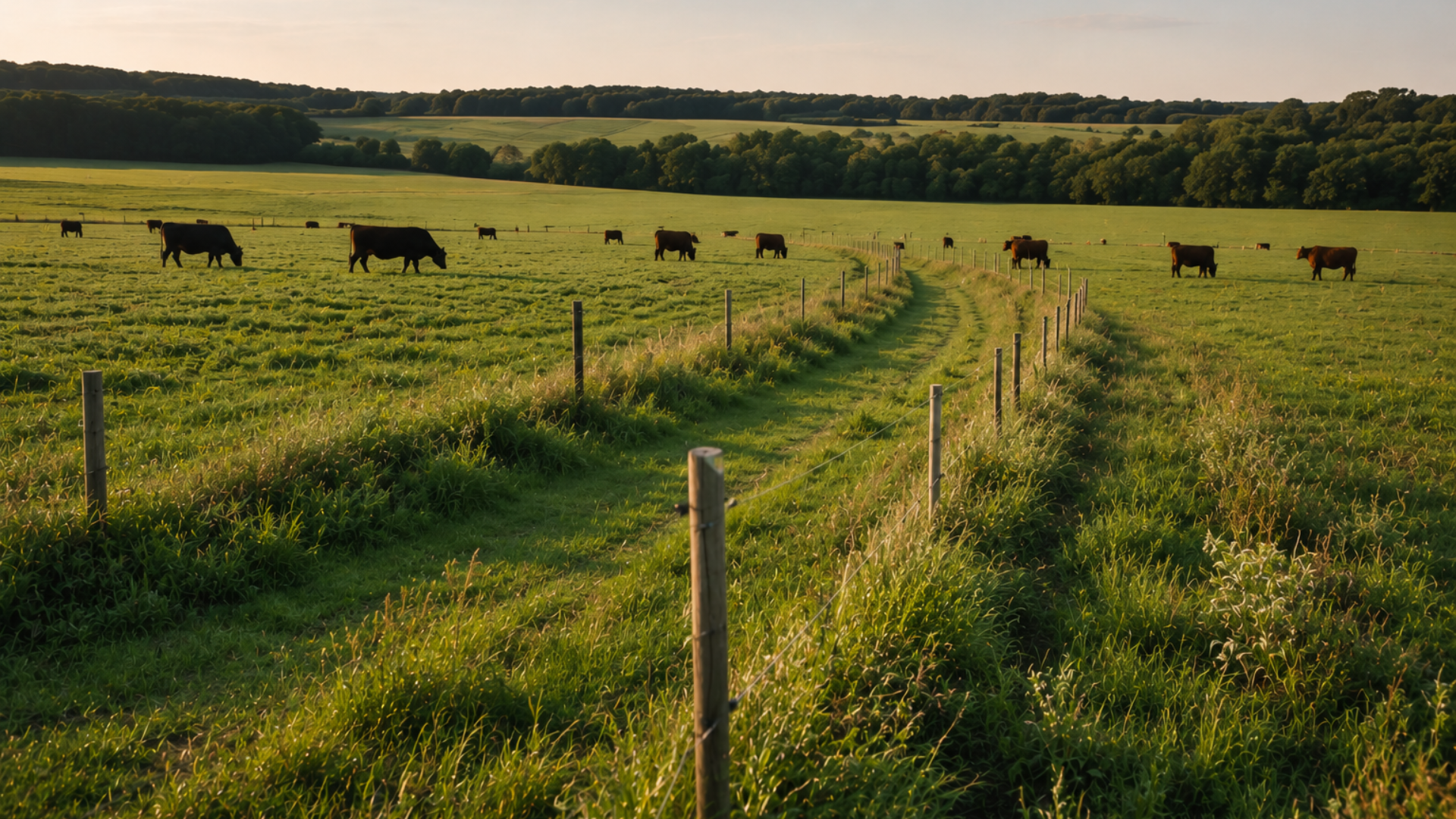
An appraiser arrives at a property that has been managed regeneratively for fourteen years. Soil organic matter has risen from 1.4 percent to 4.8 percent over the management period, documented in annual testing. The water infiltration rate, meaning how fast rainfall enters the soil rather than running off, has gone from roughly a quarter inch per hour to more than two inches per hour. Brix readings on pasture grasses measure consistently above 12, indicating the mineral and sugar content associated with significant pest resistance. The mycorrhizal network in the topsoil, not visible to the eye but measurable through laboratory analysis, supports a diversity of fungal species that adjacent commodity-managed properties do not carry. Synthetic herbicides have not been applied for fourteen years. Glyphosate residue testing of the soil shows below-detection levels. The drainage from this property contributes to local aquifer recharge. None of this appears in the appraisal.
The comparable sales show agricultural land in the county selling between $4,100 and $5,200 per acre. The appraisal produces a number in that range. The number is accurate for what it measures. What it measures is the commodity land market. The commodity land market cannot see what fourteen years of management has built.
This essay is about the gap between the appraisal and what exists.
II.
What regenerative management builds is not a single thing but a set of related biological, hydrological, and ecological accumulations, each of which requires time to develop and each of which degrades faster than it was built. Worth naming each precisely, because each has its own measurement methodology, its own documentation pathway, and its own significance in the context of what the land is worth in functional terms.
Soil biological capital. The living fraction of healthy soil, including bacteria, fungi, protozoa, nematodes, earthworms, and the biochemical products of their interactions, is the foundation of every other accumulation on this list. Soil biological activity drives organic matter decomposition and sequestration, nutrient cycling, disease suppression, and water infiltration. A soil at 4 percent organic matter does not simply have more carbon than a soil at 1.5 percent; it operates differently, infiltrates water differently, feeds plants differently, and resists both drought and flood differently. Mineral availability and balance drives this biological activity; the soil’s living fraction thrives where minerals are present in appropriate ratios and form, and diminishes where they are not. Soil biological capital is measurable: the Haney Soil Health Test measures biological activity through CO2 respiration and mineralizable nitrogen; the Cornell Comprehensive Assessment of Soil Health measures a suite of biological, chemical, and physical indicators; soil microbiome sequencing through laboratory analysis documents fungal and bacterial diversity with increasing precision. The cost of these assessments has fallen significantly over the past decade. What remains is the absence of any standard system for recording these measurements as documented attributes of the land itself, rather than as data points in the operator’s agronomic file.
Nutrient density and food quality. Land with high soil biological activity and broad mineral availability produces food with measurably different nutritional profiles from commodity production. The Brix refractometer, an inexpensive optical instrument measuring dissolved solids in plant sap, provides an accessible proxy indicator of plant nutritional status and the complex chemistry associated with pest resistance. Readings above 12 for most crops mark the general threshold above which pest resistance becomes significant; readings in the mid-teens for forages indicate high nutritional completeness. Plant sap analysis, the more complete documentation protocol developed extensively by Jon Kempf and Advancing Eco Agriculture, directly measures mineral concentrations, pH, electrical conductivity, and nitrogen ratios in plant tissue at specific growth stages, producing the granular data that shows exactly which nutrients are limiting and at what levels. More comprehensive testing also measures phytonutrient profiles and documents the absence of residue inputs. The gap between nutrient density of food produced on regeneratively managed land and food produced on conventional comparators is supported by a directional trend in the research literature, even where results vary by crop type, soil, and methodology. The evidence is not uniform, but the finding is consistent across the studies that have examined the connection most rigorously. That gap is entirely uncaptured in the commodity pricing system, which prices grain, forage, and meat by volume and class rather than by nutritional content. A premium beef operation on regeneratively managed pasture can command a market premium where that market exists. The premium reflects partly the absence of inputs and partly the presence of qualities the commodity system does not measure and has no mechanism to price at the land level.
Hydrological function and water reserve contribution. The relationship between soil organic matter and water infiltration is direct and well-documented. Higher soil organic matter increases the soil’s water-holding capacity and its infiltration rate in ways that vary by soil type but are consistent across the research literature. A soil at 4 percent organic matter holds substantially greater plant-available water than a soil at 1.5 percent, with the specific relationship varying by soil texture and mineral composition. More consequentially, it infiltrates rainfall rather than shedding it as runoff. The hydrological function of regeneratively managed land contributes to local watershed health, downstream water quality, and regional aquifer recharge in ways that extend beyond the legal water rights examined in Essay D. The landowner who has built this infiltration capacity is contributing to the water security of the surrounding basin through the management choices made on their property. That contribution is real and measurable through field infiltrometers and drainage monitoring. It is entirely absent from any conventional assessment of the land’s value or the landowner’s standing in the watershed governance.
Ecological pest and parasite mitigation. The farm operating without synthetic pesticides for fourteen years builds pest and disease resistance through two distinct mechanisms. The primary mechanism operates at the plant level: high-Brix, nutritionally complete plants complete their protein synthesis and produce secondary metabolites, including terpenes, phenolics, and alkaloids, that pest insects cannot efficiently exploit or are actively deterred by. Simple sucrose chemistry in nutritionally depleted plants is digestible by pest populations; the complex plant chemistry of well-nourished plants is not. In practical terms: these insects cannot efficiently utilize what a nutritionally complete plant has become. Plant immune function, driven by mineral completeness and biological activity in the soil, is the first line of pest defense. The secondary mechanism operates at the landscape level: diverse, biologically active soils and ecologically complex landscapes support predator-prey relationships that further reduce pest pressure. Research by Lundgren and colleagues has documented lower pest populations and higher natural enemy diversity on regenerative farms than on conventional comparators in field studies conducted primarily in the northern Great Plains and Upper Midwest. Both lines of defense have economic value in reduced input costs, reduced resistance risks, and the positive spillover they provide to adjacent properties. Neither appears in the appraisal. Neither transfers with ownership.
Clean management history: the temporal dimension. This is the most consequential category for the purposes of this series, and the one most poorly understood even by sophisticated agricultural advisors. Mycorrhizal fungal networks, the underground filament systems that connect plant root systems, facilitate nutrient exchange, and form the living infrastructure of biologically active soil, require years of undisturbed management to develop. Research on mycorrhizal recovery after glyphosate application suggests suppression effects that persist beyond the growing season, though results vary by formulation, application rate, soil type, and fungal species. The directional finding is consistent: clean management history allows mycorrhizal networks to recover and develop in ways that active synthetic herbicide use does not permit. A soil that has been clean for five years is biologically different from one that has been clean for fourteen years in ways that soil microbiome analysis can document but that no agricultural regulatory or appraisal standard currently recognizes. A second mechanism operates through mineral availability: glyphosate chelates manganese, zinc, copper, and iron, the minerals required for plant immune function and the enzymatic pathways that produce complex plant chemistry. Fourteen years without glyphosate allows these mineral cycling pathways to recover alongside the mycorrhizal networks, restoring the full spectrum of plant defense that nutritionally complete soils support.
Time is the input that cannot be purchased. Equipment can be bought, seed can be sourced, livestock can be acquired, consulting can be retained. Fourteen years of undisturbed mycorrhizal network development cannot be purchased. The soil biology that results from fourteen cycles of cover crops, rest periods, and managed grazing without synthetic inputs cannot be bought. These assets are time-denominated. Once the management changes, whether through sale to a buyer who returns to conventional practice, through the partition pressure that Essay A describes, through the covenant attenuation that results when the next generation never built the relationship with what the soil contains, the biological clock resets. Rebuilding what was lost does not take money. It takes time.
For perennial agroforestry and multi-strata cropping systems, the temporal argument extends further still. Landowners who have built perennial systems, as Mark Shepard has documented at New Forest Farm over multiple decades, accumulate biological capital through additional mechanisms and at longer timescales than the five categories above fully capture. Standing perennial biomass, deep root systems, seed bank diversity, and water retention infrastructure built into the landscape over twenty to forty years represent a category of biological capital these documentation protocols measure only partially. The resources section identifies Shepard’s work specifically for practitioners building perennial systems.
III.
The appraisal’s inability to see these assets is not an oversight. It reflects the methodology the appraisal is required to use. Comparable sales data measures what the commodity land market has paid for land in the area. The commodity land market prices agricultural land by its physical characteristics: acreage, location, water rights, structures, and soil type as mapped by USDA classification, and by its productivity in the commodity production system. It does not price biological capital because biological capital has not historically been a separately recognized asset category in agricultural real estate transactions.
The legal definition of improvements compounds the problem. In property law and appraisal practice, improvements are physical additions to land: structures, drainage systems, roads, irrigation infrastructure. Biological capital is not an improvement in this sense. It cannot be depreciated, capitalized, or separately transferred. It has no place in the standard categories that property law uses to describe what an ownership interest contains. When the land sells, the title transfers, the structures convey, and the biological capital either continues under the new operator’s management or it does not. No instrument in the transaction addresses which outcome will occur.
Conservation easements, examined in Essays B and C, protect land use in perpetuity. They can prohibit development and require continued agricultural use. What they cannot do is require that the specific management practices that built the biological capital be continued. An easement on regeneratively managed land protects the land from subdivision; it does not protect the soil from management transitions that would degrade its biological function over five years of conventional practice. The legal instruments developed to protect land use have not yet been designed to protect biological function.
What I find most striking about this gap is not the appraisal methodology itself, which reflects a technical standard with a technical explanation. It is the governance consequence: when an asset cannot be documented in a recognized form, no existing legal instrument can protect it. The biological capital exists. The framework to see it does not yet exist.
Organic certification addresses a portion of this gap: the documented absence of prohibited substances is verifiable and recognized by premium markets. But organic certification is a process standard, not a biological outcome standard. A certified organic operation may be biologically rich or biologically poor depending on the depth of its management. The certification documents what inputs were not used; it says nothing about the biological capital those abstentions built over time, or whether that capital persists from one operator to the next.
IV.
What I have found in examining the documentation practices of landowners who have been building this capital for a decade or more is that most have assembled some version of a soil test record: annual or biannual Haney results, organic matter measurements, occasionally microbiome analysis. Almost none have assembled those records into a systematic document designed for the purposes this series has been examining: succession planning, covenant transmission, governance architecture, and legal documentation.
The difference between scattered records and a systematic biological capital registry is significant. Scattered records answer the question an operator is currently asking: how is the soil doing this year, and what does the next season require? A systematic registry answers the questions that succession, governance, and eventual legal proceedings will ask: what existed here, when did it develop, what management practices produced it, what is its trajectory, and what would management continuity preserve?
Building that registry is not complicated. It requires annual soil health assessments using a consistent protocol, documented management practice records covering application dates, input records, and grazing rotation logs, periodic nutrient density measurements in produce and forage, infiltration rate documentation, and records of clean management periods including laboratory residue testing where relevant. The resources section at the end of this essay identifies the specific testing protocols, laboratories, and organizations that provide the infrastructure for each category.
What the registry enables is what the rest of this series points toward. Essay A argues that families holding land across generations had, almost without exception, some form of documented purpose statement: a written account of what the land was for that was intended for people who would never meet the person who wrote it. The biological capital registry is the complement to that purpose statement. It is the evidence that the covenant has been honored, year by year, in the biological record of the soil. It gives the next generation not just a statement of what the land is for, but a documented record of what the stewardship has produced. It also creates the basis for premium transaction conversations that undocumented capital cannot support. Sophisticated buyers and investors in regenerative land are beginning to conduct due diligence that asks for exactly this kind of documentation. The landowner who has assembled it enters those conversations in a fundamentally different position from the one who has not.
V.
The governance gap this essay points toward is distinct from those examined in the preceding essays. Essays B and C addressed the instruments that protect land use and ownership structure. This essay addresses something those instruments cannot reach: the protection of biological function that is not a legal right, not a structural asset, and not a documented characteristic of the property in any conventional sense.
What governance architecture would need to do to protect biological capital is beginning to be explored in the practice community, though the field is early. Management continuity requirements in succession architecture, specifically provisions requiring that incoming operators maintain soil health documentation and continue documented management practices as conditions of governance authority, represent one pathway. Purpose statements in family governance documents that explicitly name soil health, biological capital, and clean management history as part of what the covenant means give the next generation a specific, measurable object to steward rather than a general instruction to care for the land well.
A conservation easement can be drafted to include minimum soil health maintenance standards as a condition of the restriction, though few have been. A purpose trust holding land in perpetuity can specify that the trust’s purpose includes maintaining and improving biological capital as a defined mission, creating the legal foundation for trustee obligations that run to the soil’s health rather than only to the land’s use classification. These are not standard instruments; they are emerging practice that a small number of conservation attorneys and land governance specialists are beginning to develop.
The access note applies here with force. Systematic biological capital documentation, third-party ecological verification, and legal instruments that acknowledge biological function as a governed asset are more available to large, well-resourced holdings than to smaller operators. The biological capital being built by a 600-acre family operation is as real as that on a 60,000-acre institutional holding. The infrastructure to document, protect, and transmit it is not equally accessible at different scales, and that asymmetry points toward a design gap in the field that agricultural extension programs and land trust practitioners are only beginning to address.
VI.
The appraisal described in the opening of this essay was not wrong. It was accurate for what it measured. What it could not measure was the fourteen-year accumulation of biological function that careful management had built: the soil carbon, the mycorrhizal networks, the hydrological function, the fourteen seasons of pest management through ecology, the food quality the market had begun to recognize but that commodity comparable sales had not yet priced.
The five essays in this series have circled the same observation from different directions. The covenant that Essay A names, the ownership protections that Essay B maps, the governance authority that Essay C describes, the water architecture that Essay D examines: all of these matter more because of what the regenerative landowner is accumulating in the soil, in the watershed, and in the biological record of careful management over time. The invisible assets are what make the visible architecture worth building.
The landowner who has built this capital holds something that cannot be bought, cannot be quickly rebuilt once lost, and cannot yet be adequately protected by any existing legal or governance instrument. That last condition is a design problem in succession architecture, in conservation law, and in the appraisal methodology that cannot see it. The work of closing that gap has barely begun. The landowner who has assembled the documentation, including the biological capital registry alongside the purpose statement, the governance architecture alongside the soil test record, is doing that work ahead of the field.
What the appraisal doesn’t count is often what the land is worth.
Three Starting Questions for Your Next Advisory Conversation
These questions are offered as starting points for conversations the essay’s analysis suggests are worth having, not as a prescribed checklist.
Has the management history that has built biological capital on your land, including specific practices, input records, documented abstentions, and soil health trajectory, been assembled into a systematic record, or does it exist in scattered files, memory, and informal notes?
Does your succession plan or governance architecture name soil health, biological capital, or clean management history as part of what is being transmitted, or does it address only the legal ownership structure and asset transfer?
If your land were appraised tomorrow, what would the gap be between the commodity comparable sales value and what you know the land to be worth in functional and biological terms, and is any part of that gap documented in a form that a future owner, a lender, or a legal proceeding could examine?
Resources for Documentation, Measurement, and Further Development
The following resources are provided for landowners, advisors, and practitioners seeking to document, measure, and protect biological capital. The list is not exhaustive; the field is developing rapidly and regional resources vary significantly. Each category names the leading institutions and tools as of 2025-2026. Some cited organizations are advocacy organizations whose research arms produce valuable work alongside their promotional activities; readers should distinguish institutionally affiliated research from independent peer-reviewed findings when evaluating specific claims.
Soil Health Testing and Documentation
The Haney Soil Health Test, developed at the USDA Agricultural Research Service laboratory in Temple, Texas, measures biological activity through CO2 respiration, water-extractable organic carbon and nitrogen, and a soil health calculation that integrates multiple indicators. Ward Laboratories (Kearney, Nebraska) and Regen Ag Lab (Huntsville, Arkansas) are the primary commercial providers. Annual Haney testing over a multi-year period provides the trajectory documentation most useful for biological capital registry purposes.
The Cornell Comprehensive Assessment of Soil Health (CASH) measures physical, biological, and chemical indicators calibrated against regional benchmarks, enabling landowners to track trajectory relative to reference soils in their region. Cornell University’s Soil Health Laboratory provides the assessment and has published its methodology fully for use by regional labs.
Trace Genomics (California) and similar soil microbiome DNA sequencing services document bacterial and fungal diversity at a precision that conventional soil testing cannot achieve. For landowners building a long-term biological capital registry, microbiome baseline assessments at the outset and at five-year intervals provide documented trajectory data that soil chemistry alone cannot supply.
The USDA NRCS Web Soil Survey (websoilsurvey.nrcs.usda.gov) provides free access to the national soil classification baseline. It does not document biological capital but establishes the physical starting point against which biological improvements are measured over time.
Nutrient Density Measurement
The Bionutrient Institute (Northampton, Massachusetts; bionutrient.org) conducts ongoing research on nutrient density measurement and has developed accessible on-farm protocols for Brix measurement and more comprehensive mineral density assessment. Their work connecting soil health indicators to food nutrient density provides the most rigorous current research linking the two.
Advancing Eco Agriculture (Middlefield, Ohio; advancingecoagriculture.com), founded by Jon Kempf, provides soil and tissue testing oriented toward nutrient density outcomes, with plant sap analysis protocols specifically calibrated for regenerative management systems. Kempf’s plant sap analysis framework, which measures actual mineral concentrations and plant immune function indicators at specific growth stages, provides more complete nutrient density documentation than Brix measurement alone. The Regenerative Agriculture Podcast (regen.ag), produced by Kempf, is an interview library of more than 400 episodes covering plant health, mineral nutrition, pest resistance mechanisms, and biological system management. It constitutes the most comprehensive practitioner-accessible documentation of how plant immune function connects to soil biology and regenerative management outcomes.
A&L Laboratories (multiple regional locations) and Crop Quest provide comprehensive tissue and produce testing, including mineral profiles and phytonutrient analysis, at commercial scale accessible to farm operations.
Water Infiltration and Hydrological Function
The Cornell Sprinkle Infiltrometer, available through Cornell Cooperative Extension and comparable extension services, provides a standardized field method for measuring soil water infiltration rates. The Soil Health Institute (soilhealthinstitute.org) publishes protocols for incorporating infiltration measurement into systematic soil health monitoring programs.
The USDA NRCS Conservation Effects Assessment Project (CEAP) documents watershed-scale hydrological outcomes associated with conservation practices, providing the research basis for attributing aquifer recharge contribution to specific management practices on individual properties.
Ecological Verification Programs
The Savory Institute’s Land to Market program (savory.global/land-to-market) provides Ecological Outcome Verification (EOV), a third-party assessment protocol documenting ecological trajectory across soil health, water cycling, biodiversity, and mineral cycling indicators. EOV documentation provides the kind of verified, dated ecological record that succession planning, premium market relationships, and in some contexts legal proceedings can examine.
Regenerative Organic Certified, administered by the Rodale Institute (rodaleinstitute.org), extends beyond organic process standards to include soil health outcome requirements, animal welfare standards, and farmer fairness criteria. For landowners seeking documented certification that connects management practice to biological outcome, ROC represents the most comprehensive current standard.
Understanding Ag (understandingag.com) provides direct on-farm consulting and soil health assessment oriented toward regenerative systems, with practitioner experience across multiple climates and production types.
Pest and Parasite Ecology Research and Documentation
The Ecdysis Foundation (Brookings, South Dakota; ecdysis.bio), led by Dr. Jonathan Lundgren, provides the most rigorous peer-reviewed documentation of ecological pest management outcomes in regenerative systems. The foundation publishes accessible summaries of its research for farm practitioner use and conducts on-farm research partnerships.
LaCanne and Lundgren (2018), “Regenerative agriculture: merging farming and natural resource conservation profitably,” published in PeerJ, provides the foundational peer-reviewed comparison of pest population dynamics and natural enemy diversity across regenerative and conventional management systems. Kempf’s work at Advancing Eco Agriculture and documented in the Regenerative Agriculture Podcast provides the most developed practitioner framework for the plant immune function mechanism: the specific mineral and Brix thresholds associated with pest resistance, and the management practices that build plant-level defense alongside ecological predator-prey function.
Governance and Succession Resources Connecting to Biological Capital
The American Farmland Trust (farmland.org) provides the most developed practitioner guidance on connecting ecological and biological values to succession architecture. Their Transition Assistance program works directly with landowners on succession structures that address management continuity alongside legal ownership transfer.
The Land Stewardship Project (Minnesota; landstewardshipproject.org) has developed practitioner resources on succession architecture specifically designed to address the transmission of management philosophy and ecological values alongside legal title.
The National Young Farmers Coalition (youngfarmers.org) connects the biological capital question to the land access challenge: the infrastructure for ensuring that management continuity across operator generations preserves accumulated biological capital rather than requiring the next operator to rebuild it from a depleted baseline.
Perennial and Agroforestry Systems
Shepard, M. (2013). Restoration Agriculture: Real-World Permaculture for Farmers. Acres U.S.A. The primary documented account of perennial polyculture system development at New Forest Farm across multi-decade timescales, including biological capital accumulation in woody perennial systems that the five categories in this essay capture only partially. For landowners building perennial systems, Shepard’s framework adds documentation categories the essay’s annual-system protocols do not address: standing perennial biomass inventory, root depth and canopy mapping, species diversity index, and water retention feature documentation.
Shepard, M. (2013). Water for Any Farm. Acres U.S.A. Shepard’s treatment of water harvesting, retention, and infiltration at landscape scale, directly relevant to the hydrological function category. New Forest Farm’s documented water table recovery over decades provides one of the few long-term empirical records of what perennial regenerative management does to local hydrology, extending the hydrological function argument significantly beyond what annual system documentation captures.
New Forest Farm (newforestfarm.net). The most extensively documented long-term perennial agroforestry operation in North America, providing the multi-decade biological capital trajectory that this essay argues should be the norm in succession and governance documentation. Shepard’s farm records represent exactly the kind of systematic biological capital registry the essay recommends, built across a timescale that makes the temporal argument concrete.
Key Reading
Montgomery, D.R. (2017). Growing a Revolution: Bringing Our Soil Back to Life. W.W. Norton. The most accessible scientific treatment of the relationship between soil biology and agricultural productivity, covering the research basis for biological capital accumulation across multiple farming systems and continents.
Montgomery, D.R. and Biklé, A. (2016). The Hidden Half of Nature. W.W. Norton. The soil microbiome research underlying the nutrient density and biological capital arguments in this essay, written for a general scientific audience.
Brown, G. (2018). Dirt to Soil: One Family’s Journey into Regenerative Agriculture. Chelsea Green. The practitioner account of one operator’s multi-decade trajectory of biological capital building, with measurable soil health outcomes documented at each stage.
Jones, C. (various years). Research papers on biological carbon sequestration, the liquid carbon pathway, and mycorrhizal function in regenerative systems, available through the Amazing Carbon project (amazingcarbon.com). The most direct available treatment of the temporal dimension of mycorrhizal development and its implications for management continuity.
Teague, R. et al. (2016). “The role of ruminants in reducing agriculture’s carbon footprint in North America.” Journal of Soil and Water Conservation, 71(2). The peer-reviewed basis for the carbon sequestration and hydrological function outcomes associated with adaptive multi-paddock grazing management.
Ingham, E. (various years). Soil food web research documentation, available through the Soil Food Web School (soilfoodweb.com). The foundational work on soil biology community structure and its relationship to biological capital accumulation.