
The Authority That Came With the Land

May 8, 2026

I.

The first two essays in this series named two things that come with land but don’t appear on the title: the covenant obligation that makes land worth holding across generations, and the gaps in what ownership actually guarantees. This essay names a third. The legal framework most landowners operate under describes them as owners. The functions they are actually performing describe something closer to trustees. Most large landowners have not been offered this framing by their advisors. The essay makes it explicit.


Every large landowner is making decisions that affect parties who had no voice in making them. The management choices that determine whether a watershed runs clean or carries sediment, whether a soil profile builds carbon or releases it, whether a landscape functions as connected habitat or as barrier, these choices affect downstream communities, future generations, and ecological systems that cannot participate in the decisions. The landowner did not choose to hold this authority. They purchased land, and the authority came with it.


This is not a critique. It is a description of what large land ownership actually involves. The relevant question is not whether a landowner exercises these functions, they do, by definition, but whether the legal framework they are operating under is the most appropriate one for the functions they are actually performing.


Fee simple ownership is a legal form optimized for a specific purpose: holding an asset with maximum flexibility, minimum external obligation, and full authority to transfer, mortgage, and devise. It is an excellent legal form for that purpose. But the functions that come with large land ownership, watershed stewardship, ecological management, community food infrastructure, future-generation land custody, were not the functions fee simple was designed to hold. They are trustee functions, and fee simple holds them without governance structures that make them legible, without legal protections that make them durable, and without institutional expressions that allow outside parties to rely on them.


Research on land governance structures, conducted by the Lincoln Institute of Land Policy and by university agricultural law programs, consistently finds that the large majority of agricultural land holdings in the United States have no formal governance structure beyond a standard estate plan. The estate plan addresses who will own the land. It does not address how the land will be managed, what community relationships will be maintained, what ecological functions will be preserved, or what will happen when heirs disagree about purpose rather than about assets. The gap between what large landowners actually do and what their legal structure says they are doing is one of the most consequential unaddressed mismatches in American property law. This essay names it, traces what formal acknowledgment of that gap would make available, and leaves the decision about whether to close it where it belongs. Its focus is the ecological and community dimensions of the functions large landowners already exercise, the watershed, the soil, the food system, the future. The generational and succession dimensions of the same problem are examined in the companion essay in this series, The Generation That Breaks the Land.


II.

A trustee holds property for the benefit of another. The trustee has legal title, the same kind of title a fee simple owner holds, but exercises it under obligations that constrain self-dealing and require consideration of beneficiary interests. The trustee’s duties, established in the Restatement (Third) of Trusts and refined through centuries of case law, include duties of loyalty (to the trust’s purpose and beneficiaries), prudence (in management decisions), and impartiality (among different categories of beneficiaries, including those whose interests are distributed across time).

The most important feature of trustee status, for the purposes of this essay, is that the trustee manages property for purposes that extend beyond their own interests. A fee simple owner’s primary legal obligation runs to themselves. A trustee’s primary legal obligation runs to the trust’s purpose and to whoever benefits from it. The essay uses trustee in both a legal sense, where it refers to the specific fiduciary role with defined duties and enforcement mechanisms, and in an analytical sense, where it refers to anyone exercising stewardship functions with consequences for parties beyond themselves. The distinction matters: the legal trustee can be sued for breach of fiduciary duty; the analytical trustee cannot. Formalization, which is the subject of Section IV, is what converts the analytical relationship into the legal one.


Eric Freyfogle’s work on American land law makes an argument contested by some property rights scholars but consistent with the historical record: that private land ownership in the United States has never been fully separable from public obligations, that the colonial and early American understanding of property included stewardship duties that the fee simple absolutism of the twentieth century gradually obscured. The landowner who manages their property as if their only obligation runs to themselves is exercising a reading of property law that is historically recent and philosophically contested. What Freyfogle calls “the land we share” is not a political argument for regulation; it is a historical observation about what ownership has meant across most of the American legal tradition.

The objection from the property rights tradition deserves direct engagement before the essay proceeds: “You are a trustee” sounds like an argument that landowners should be held externally accountable, regulated, or required to give communities formal voice in their management decisions. That reading is wrong, and the essay will not support it. Formalizing the trustee role is a choice the landowner makes, not an obligation imposed on them. What formalization accomplishes is giving the landowner access to governance structures, legal protections, and institutional relationships that the fee simple framework does not provide, structures that serve the landowner’s own long-horizon interests. Trusteeship, in the sense used here, is not a constraint on ownership. It is a more sophisticated form of it.


III.

Worth naming each function precisely rather than impressionistically: the structural responses available depend on which function is at issue, and conflating them produces governance structures that address the wrong problem. The essay uses large land ownership throughout without defining a precise acreage threshold; the five functions below become more consequential as a holding’s watershed influence, ecological footprint, and community relevance increase. The trusteeship question is not about acreage alone.


Five functions that come with large land ownership are trustee functions in the analytical sense: they involve managing something that has consequences for parties beyond the current owner.

Watershed custody. The management decisions made on large land holdings determine water quality, quantity, and timing for downstream users across watersheds that extend far beyond the property boundary. A landowner who manages riparian vegetation, maintains wetland functions, and practices soil management that increases water infiltration is providing watershed services that downstream communities, municipalities, farmers, and ecosystems depend on but have no formal relationship with. A landowner whose management degrades these functions imposes costs on the same communities. The fee simple framework creates no governance mechanism by which those downstream interests appear in the landowner’s decision-making calculus; regulatory compliance obligations exist but are different in kind from a proactive governance relationship with affected communities. The landowner exercises the function without the governance structure that trustee status would provide.


Carbon and ecological function custody. Soil management decisions at the scale of large land holdings have measurable consequences for atmospheric carbon, regional biodiversity, and the ecological functions that surrounding landscapes depend on. A landowner managing 10,000 acres regeneratively, maintaining diverse perennial root systems, building soil organic matter, and restoring native plant communities, is sequestering carbon and supporting biodiversity at scales that affect regional ecological function. The same landowner managing extractively is doing the reverse; conventional management varies widely, but its most common forms do not build the ecological functions that regenerative management produces. In neither case does the fee simple framework create a governance relationship between the landowner’s decisions and the parties who benefit from or bear the costs of those decisions. The carbon markets that attempted to create such a relationship, and the reasons those markets failed to hold the analytical weight placed on them, are addressed in the companion essay that opens this series. The failure of that market mechanism does not eliminate the function; it leaves it unacknowledged in the ownership architecture.


Community food infrastructure. In many rural areas, the production decisions of major landowners substantially shape the availability and economics of local food systems. The choice to convert productive agricultural land to non-agricultural uses, or to shift production in ways that affect local supply chains and local processing infrastructure, affects communities whose dependence on that infrastructure is real but whose relationship to the landowner is entirely incidental. This function has become more visible as local food system development has demonstrated both the economic value of regional food infrastructure and the degree to which that infrastructure depends on the sustained production decisions of a relatively small number of large landowners in any given region. The landowner who anchors a local food system is exercising a community infrastructure function without a governance structure that acknowledges it, and without the legal protections that formalized acknowledgment would provide.


Biological and ecological patrimony. Large land holdings that maintain diverse, healthy soil biology, native plant communities, and intact habitat function as repositories of biological material that took centuries to develop. Management decisions that degrade this patrimony impose costs on future generations that current ownership frameworks have no mechanism to register.

Future-generation land custody. The management practices that build or deplete soil health, establish or remove perennial vegetation, and maintain or degrade the land’s productive capacity are making decisions whose consequences will be experienced primarily by people who will own or depend on that land in thirty, fifty, and one hundred years. A soil profile that took a thousand years to develop can be substantially degraded in a decade of extractive management. The decision to degrade it is made by a landowner whose legal framework assigns them no obligation to the people who will need that soil after the current owner is gone. Fee simple ownership assigns no formal obligation to those future parties and provides no governance structure for their interests to influence current decisions. The trustee’s impartiality duty, requiring that trustees balance the interests of beneficiaries whose claims are distributed across time including those who have not yet arrived, is precisely calibrated to this kind of intergenerational consequence. Fee simple ownership has no built-in equivalent to that duty.


The most consistent finding documented by practitioners who have worked through formalization decisions with landowners is not what changed legally but what changed in how landowners describe their own work. Those who have formalized the trustee relationship tend to describe management decisions differently afterward: as obligations rather than choices, as custody rather than ownership. The acknowledgment itself appears to change the frame, and the changed frame changes the decisions. The legal instrument is the mechanism; the shift in how the landowner understands what they are doing is the outcome. That shift is not legally required by any of the formal structures described in this essay. It tends to happen anyway when the formalization is made explicit.


IV.

What changes when a landowner formalizes the trustee relationship depends on which formal structure they choose. The survey below describes each structure as practitioners who have used it describe it: what it addresses, what it does not, and where the working examples are. No structure is recommended; the appropriate fit depends on the landowner’s specific purposes and circumstances.

Conservation trust structures are the most widely deployed formal acknowledgment of the watershed and ecological custody functions. A conservation easement held in perpetuity by a qualified organization formally acknowledges that the land management function has consequences for parties beyond the current owner, creates a legal mechanism for those consequences to shape management decisions, and makes the acknowledgment durable across ownership transitions. What conservation trust structures address well is land use permanence. What they address less completely is the governance relationship with surrounding communities: the easement restricts management options but does not create a formal relationship with the downstream or adjacent parties whose interests the restrictions are designed to protect.


Charitable trust and foundation structures, the Bosch foundation model dating to 1937, the Carlsberg Foundation structure since 1876, the Novo Nordisk Foundation architecture, and their analogues in land rather than industrial enterprise, are perpetual purpose structures in which ownership is held for a defined mission. Colin Mayer’s analysis of purpose-driven enterprise, developed in his work published before the Patagonia 2022 transition made these structures publicly prominent, identifies the mechanism through which formal purpose changes the operative logic throughout the organization: when purpose is the foundation of ownership rather than a constraint on self-interest, the governance calculus at every level changes. The Bosch foundation’s operating history across more than eighty years, through World War II, post-war division, and a century of technological disruption in the industries it holds, demonstrates that purpose-locked ownership structures can maintain their governance integrity across conditions that would have forced conventionally owned enterprises into exits, mergers, or dissolution. The Carlsberg Foundation’s alcohol and natural science mandate has operated since 1876 across governance regimes of multiple types. These are not examples of perfect management; they are examples of ownership structures that survived conditions the original architects could not have anticipated, because the purpose-lock made the structure expensive to dissolve and the governance architecture maintained continuity independent of any individual’s continued involvement. For land holdings, what changes when a charitable trust structure is used: the purpose of the holding is legally defined and binding on successors, capital formation through philanthropic and mission-aligned investment becomes available, and the tax treatment of land management expenditures changes. What does not change is management authority; the trustee still makes management decisions. What changes is the framework within which those decisions are made and the parties to whom the trustee’s obligations run.


Community land trust structures, primarily developed in the affordable housing context but increasingly applied to agricultural land, are the most governance-intensive formal structure, explicitly bringing community representatives into the governance of the holding. A community land trust holds land for community benefit with governance shared between users, community representatives, and public interest participants. For agricultural land, this means the community whose watershed, food system, and landscape the land affects becomes a formal participant in the governance of decisions that affect them. What CLTs address is the governance gap: not in the regulatory sense but in the institutional sense. The community land trust model, developed primarily in the United States since the late 1960s, creates a three-party governance structure. The landholding organization is governed by equal representation of residents (or in the agricultural context, farm operators), community members, and public interest representatives. The documented experience in the agricultural land trust literature and practitioner case studies, particularly from New England and the Upper Midwest, points to a consistent pattern across the tenure arrangements that have held across multiple operator generations. The common feature is not the specific legal instrument but the explicit acknowledgment at the founding that the land’s agricultural purpose was being held for something beyond any individual owner’s interests. That acknowledgment, made formal and binding, changed how successive operators related to the land, not as an investment to be optimized but as a stewardship to be maintained. Agricultural land trust work in Massachusetts, Vermont, and across the American Midwest and South has applied variations of this model to farmland with outcomes that have held across multiple operator generations. What CLTs constrain is unilateral authority over management decisions affecting community interests. The cases that have used this structure have generally traded some degree of management independence for institutional permanence and formalized community relationship, a trade that most CLT participants have found favorable in retrospect, particularly those who experienced the alternatives.


The access note applies here with particular force: formal trustee structures require legal infrastructure, professional advisory capacity, and ongoing governance maintenance that are more available to large holdings than to smaller operators. The five trustee functions described in Section III do not scale with acreage; a 600-acre family operation exercises them as fully as a 60,000-acre institutional holding. The formal structures that acknowledge those functions are more accessible at larger scale. That asymmetry is a design problem in land governance that the field has not yet solved.


Partial and hybrid structures allow landowners to formalize some trustee functions while retaining fee simple authority over others. A conservation easement on the land layer with fee simple ownership of the operations layer formalizes the ecological custody function without constraining the operating structure. A purpose trust holding a controlling stake with conventional investment at the operating layer formalizes the long-horizon ownership commitment without constraining day-to-day management. A deed covenant establishing specific management standards that run with the land and bind successors formalizes the future-generation custody function without requiring the full apparatus of a charitable trust. Each of these partial formalizations can be layered onto an existing fee simple holding without restructuring the entire ownership arrangement. The practical value of partial formalization is often underestimated: it can close the most significant governance gaps, typically the ecological and future-generation functions, while preserving the flexibility that fee simple ownership provides for the operating and financial functions. For smaller operators for whom the full-architecture alternatives are financially out of reach, the partial formalization path is both more realistic and more calibrated to the specific trustee functions that matter most for their specific situation.


V.

Four structural reasons explain why most large landowners have not formalized the trustee relationship, none of which reflects a failure of values or stewardship intent. I want to say that directly, because the essay’s argument is easy to misread as a critique of landowners who haven’t made this choice. It is not.


Legal complexity, transaction cost, and adverse consequences in some structures. Trust structures require legal expertise, ongoing governance maintenance, and in most cases professional organizational relationships. Fee simple is simpler to establish and simpler to maintain. For a landowner whose primary interest is in the land itself rather than in the governance architecture that holds it, the transaction cost of formalization is a real constraint. Beyond transaction cost, some formalization paths carry adverse consequences that the essay has not fully addressed: conservation easements placed in certain market conditions or with certain donees can produce adverse tax outcomes; charitable trust structures can generate unrelated business taxable income complications; CLT structures can create governance burdens that outlast the founding generation’s goodwill. The formalization decision is not obviously net-positive for every landowner in every circumstance, and the appropriate structure depends on specific facts that require specific professional analysis.


Flexibility loss. Formalizing trustee obligations constrains future options in ways that are real and sometimes significant. A conservation easement restricts certain management changes permanently. A charitable trust structure limits the ability to sell the enterprise for personal liquidity. A CLT structure constrains unilateral authority in ways that some landowners find incompatible with their management philosophy. These are not irrational objections; they reflect genuine trade-offs between institutional durability and personal flexibility.


Identity discomfort. Describing oneself as a trustee rather than as an owner requires a shift in self-conception that many landowners find uncomfortable, particularly in cultural contexts that prize ownership independence. This discomfort is worth taking seriously rather than dismissing. The trustee frame asks not that the landowner relinquish authority but that they acknowledge what their authority is actually for. For landowners whose identity is built around the independence that ownership provides, that acknowledgment can feel like a concession rather than a clarification. The discomfort itself is evidence of how thoroughly the fee simple framework shapes how people think about what they hold.


Absence of a decision moment. Estate planning has a natural trigger: aging, illness, estate tax exposure. Succession planning has a trigger: children reaching adulthood, management transitions. The decision to formalize trustee obligations has no natural trigger. It can always be deferred, because the cost of deferral is not immediately visible. The cost becomes visible when a holding changes hands without the purposes it served being transmitted, which is usually too late to address through governance architecture. The generational mechanism by which this happens, and what succession architecture can interrupt it, is examined in depth in the companion essay in this series, The Generation That Breaks the Land.


VI.

The landowner who finishes this essay is not being told to become a trustee. They already are one. The functions they are performing are trustee functions regardless of the legal structure they hold. What the essay offers is the observation that the fee simple framework is not the only available container for those functions, and that the alternative containers carry legal protections, governance structures, and institutional relationships that serve the landowner’s own long-horizon interests in ways that fee simple does not.


The decision to remain in fee simple is a legitimate choice with legitimate reasons. What this essay argues is that it should be a conscious choice rather than a default, that a landowner who has considered the full range of structures available and chosen fee simple is holding that choice differently from one who never considered the question.


The functions the land requires do not stop at the property boundary. The governance structures that hold those functions do not have to stop there either. Whether to align the two is the landowner’s decision to make. The essay’s contribution is making clear that the decision exists, that it has consequences either way, and that the structures required to make it are available.


Three Starting Questions for Your Next Advisory Conversation


These questions are offered as starting points for conversations the essay’s analysis suggests are worth having, not as a prescribed checklist.


Is there any formal instrument currently in place that would make it difficult for a future owner of this land to change its management in ways incompatible with our current purposes? If not, what is the simplest instrument that would address that gap?


How do we currently describe what we are doing with this land, to our advisors, to our lenders, to our heirs? Does that description acknowledge the trustee functions we are already exercising, or does it default to the ownership language that the fee simple framework provides?


If we wanted to formalize one of the five trustee functions described in this essay, starting with the one most important to us, what would that instrument look like and who would we need to talk to in order to understand the options?

May 8, 2026
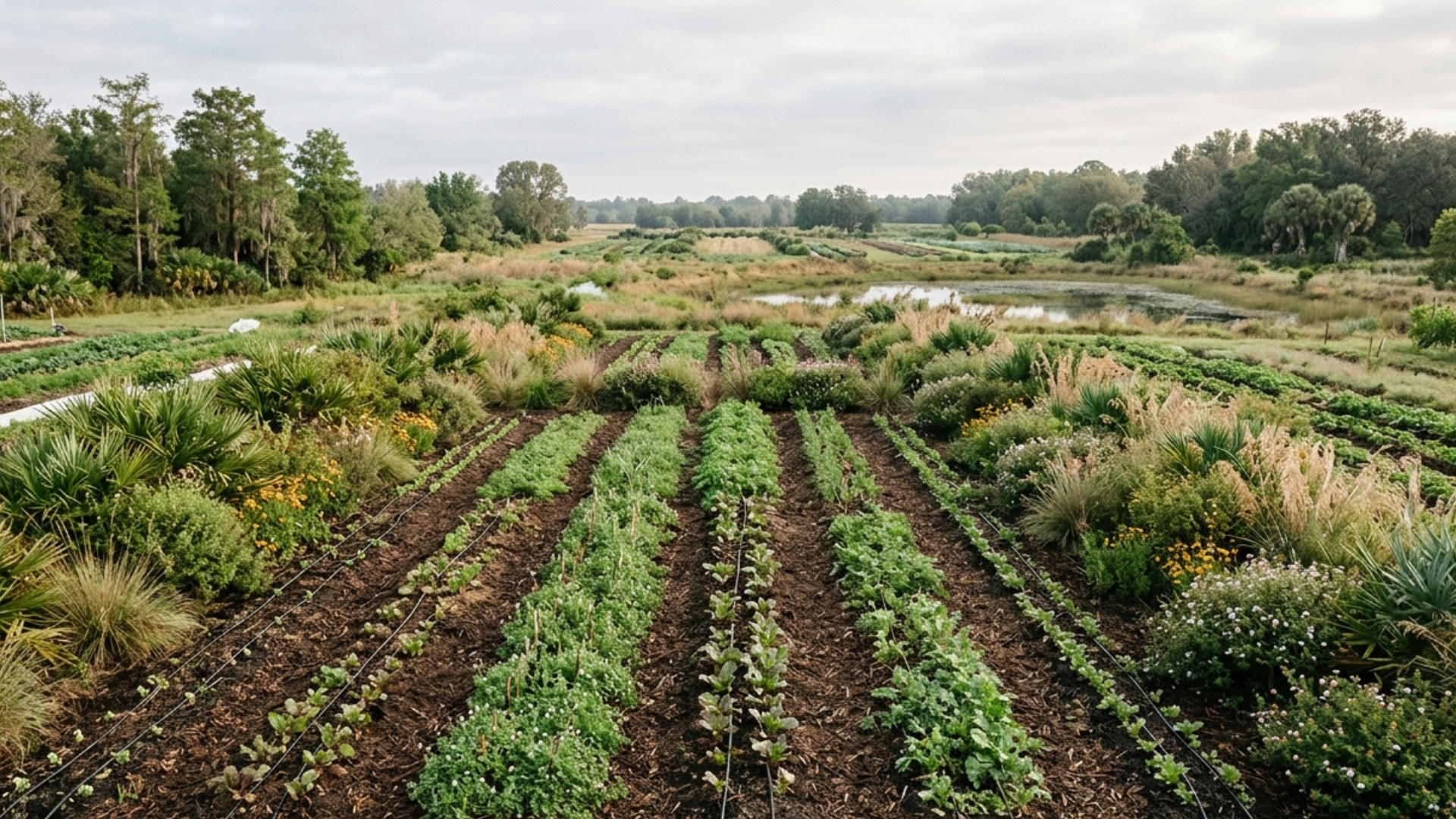
I. The four preceding essays in this series named what comes with land that the conventional frameworks don’t show: the covenant obligation, the gaps in what ownership guarantees, the governance authority already being exercised, and the water rights architecture beneath everything. This essay names a fifth category, and it runs in the opposite direction. The first four essays describe what the land already carries: obligations, exposures, and functions the landowner may not have recognized. This essay is about what the land is accumulating, under careful management, that the ownership framework is least equipped to see.  An appraiser arrives at a property that has been managed regeneratively for fourteen years. Soil organic matter has risen from 1.4 percent to 4.8 percent over the management period, documented in annual testing. The water infiltration rate, meaning how fast rainfall enters the soil rather than running off, has gone from roughly a quarter inch per hour to more than two inches per hour. Brix readings on pasture grasses measure consistently above 12, indicating the mineral and sugar content associated with significant pest resistance. The mycorrhizal network in the topsoil, not visible to the eye but measurable through laboratory analysis, supports a diversity of fungal species that adjacent commodity-managed properties do not carry. Synthetic herbicides have not been applied for fourteen years. Glyphosate residue testing of the soil shows below-detection levels. The drainage from this property contributes to local aquifer recharge. None of this appears in the appraisal. The comparable sales show agricultural land in the county selling between $4,100 and $5,200 per acre. The appraisal produces a number in that range. The number is accurate for what it measures. What it measures is the commodity land market. The commodity land market cannot see what fourteen years of management has built. This essay is about the gap between the appraisal and what exists. II. What regenerative management builds is not a single thing but a set of related biological, hydrological, and ecological accumulations, each of which requires time to develop and each of which degrades faster than it was built. Worth naming each precisely, because each has its own measurement methodology, its own documentation pathway, and its own significance in the context of what the land is worth in functional terms. Soil biological capital. The living fraction of healthy soil, including bacteria, fungi, protozoa, nematodes, earthworms, and the biochemical products of their interactions, is the foundation of every other accumulation on this list. Soil biological activity drives organic matter decomposition and sequestration, nutrient cycling, disease suppression, and water infiltration. A soil at 4 percent organic matter does not simply have more carbon than a soil at 1.5 percent; it operates differently, infiltrates water differently, feeds plants differently, and resists both drought and flood differently. Mineral availability and balance drives this biological activity; the soil’s living fraction thrives where minerals are present in appropriate ratios and form, and diminishes where they are not. Soil biological capital is measurable: the Haney Soil Health Test measures biological activity through CO2 respiration and mineralizable nitrogen; the Cornell Comprehensive Assessment of Soil Health measures a suite of biological, chemical, and physical indicators; soil microbiome sequencing through laboratory analysis documents fungal and bacterial diversity with increasing precision. The cost of these assessments has fallen significantly over the past decade. What remains is the absence of any standard system for recording these measurements as documented attributes of the land itself, rather than as data points in the operator’s agronomic file. Nutrient density and food quality. Land with high soil biological activity and broad mineral availability produces food with measurably different nutritional profiles from commodity production. The Brix refractometer, an inexpensive optical instrument measuring dissolved solids in plant sap, provides an accessible proxy indicator of plant nutritional status and the complex chemistry associated with pest resistance. Readings above 12 for most crops mark the general threshold above which pest resistance becomes significant; readings in the mid-teens for forages indicate high nutritional completeness. Plant sap analysis, the more complete documentation protocol developed extensively by Jon Kempf and Advancing Eco Agriculture, directly measures mineral concentrations, pH, electrical conductivity, and nitrogen ratios in plant tissue at specific growth stages, producing the granular data that shows exactly which nutrients are limiting and at what levels. More comprehensive testing also measures phytonutrient profiles and documents the absence of residue inputs. The gap between nutrient density of food produced on regeneratively managed land and food produced on conventional comparators is supported by a directional trend in the research literature, even where results vary by crop type, soil, and methodology. The evidence is not uniform, but the finding is consistent across the studies that have examined the connection most rigorously. That gap is entirely uncaptured in the commodity pricing system, which prices grain, forage, and meat by volume and class rather than by nutritional content. A premium beef operation on regeneratively managed pasture can command a market premium where that market exists. The premium reflects partly the absence of inputs and partly the presence of qualities the commodity system does not measure and has no mechanism to price at the land level. Hydrological function and water reserve contribution. The relationship between soil organic matter and water infiltration is direct and well-documented. Higher soil organic matter increases the soil’s water-holding capacity and its infiltration rate in ways that vary by soil type but are consistent across the research literature. A soil at 4 percent organic matter holds substantially greater plant-available water than a soil at 1.5 percent, with the specific relationship varying by soil texture and mineral composition. More consequentially, it infiltrates rainfall rather than shedding it as runoff. The hydrological function of regeneratively managed land contributes to local watershed health, downstream water quality, and regional aquifer recharge in ways that extend beyond the legal water rights examined in Essay D. The landowner who has built this infiltration capacity is contributing to the water security of the surrounding basin through the management choices made on their property. That contribution is real and measurable through field infiltrometers and drainage monitoring. It is entirely absent from any conventional assessment of the land’s value or the landowner’s standing in the watershed governance. Ecological pest and parasite mitigation. The farm operating without synthetic pesticides for fourteen years builds pest and disease resistance through two distinct mechanisms. The primary mechanism operates at the plant level: high-Brix, nutritionally complete plants complete their protein synthesis and produce secondary metabolites, including terpenes, phenolics, and alkaloids, that pest insects cannot efficiently exploit or are actively deterred by. Simple sucrose chemistry in nutritionally depleted plants is digestible by pest populations; the complex plant chemistry of well-nourished plants is not. In practical terms: these insects cannot efficiently utilize what a nutritionally complete plant has become. Plant immune function, driven by mineral completeness and biological activity in the soil, is the first line of pest defense. The secondary mechanism operates at the landscape level: diverse, biologically active soils and ecologically complex landscapes support predator-prey relationships that further reduce pest pressure. Research by Lundgren and colleagues has documented lower pest populations and higher natural enemy diversity on regenerative farms than on conventional comparators in field studies conducted primarily in the northern Great Plains and Upper Midwest. Both lines of defense have economic value in reduced input costs, reduced resistance risks, and the positive spillover they provide to adjacent properties. Neither appears in the appraisal. Neither transfers with ownership. Clean management history: the temporal dimension. This is the most consequential category for the purposes of this series, and the one most poorly understood even by sophisticated agricultural advisors. Mycorrhizal fungal networks, the underground filament systems that connect plant root systems, facilitate nutrient exchange, and form the living infrastructure of biologically active soil, require years of undisturbed management to develop. Research on mycorrhizal recovery after glyphosate application suggests suppression effects that persist beyond the growing season, though results vary by formulation, application rate, soil type, and fungal species. The directional finding is consistent: clean management history allows mycorrhizal networks to recover and develop in ways that active synthetic herbicide use does not permit. A soil that has been clean for five years is biologically different from one that has been clean for fourteen years in ways that soil microbiome analysis can document but that no agricultural regulatory or appraisal standard currently recognizes. A second mechanism operates through mineral availability: glyphosate chelates manganese, zinc, copper, and iron, the minerals required for plant immune function and the enzymatic pathways that produce complex plant chemistry. Fourteen years without glyphosate allows these mineral cycling pathways to recover alongside the mycorrhizal networks, restoring the full spectrum of plant defense that nutritionally complete soils support. Time is the input that cannot be purchased. Equipment can be bought, seed can be sourced, livestock can be acquired, consulting can be retained. Fourteen years of undisturbed mycorrhizal network development cannot be purchased. The soil biology that results from fourteen cycles of cover crops, rest periods, and managed grazing without synthetic inputs cannot be bought. These assets are time-denominated. Once the management changes, whether through sale to a buyer who returns to conventional practice, through the partition pressure that Essay A describes, through the covenant attenuation that results when the next generation never built the relationship with what the soil contains, the biological clock resets. Rebuilding what was lost does not take money. It takes time. For perennial agroforestry and multi-strata cropping systems, the temporal argument extends further still. Landowners who have built perennial systems, as Mark Shepard has documented at New Forest Farm over multiple decades, accumulate biological capital through additional mechanisms and at longer timescales than the five categories above fully capture. Standing perennial biomass, deep root systems, seed bank diversity, and water retention infrastructure built into the landscape over twenty to forty years represent a category of biological capital these documentation protocols measure only partially. The resources section identifies Shepard’s work specifically for practitioners building perennial systems. III. The appraisal’s inability to see these assets is not an oversight. It reflects the methodology the appraisal is required to use. Comparable sales data measures what the commodity land market has paid for land in the area. The commodity land market prices agricultural land by its physical characteristics: acreage, location, water rights, structures, and soil type as mapped by USDA classification, and by its productivity in the commodity production system. It does not price biological capital because biological capital has not historically been a separately recognized asset category in agricultural real estate transactions. The legal definition of improvements compounds the problem. In property law and appraisal practice, improvements are physical additions to land: structures, drainage systems, roads, irrigation infrastructure. Biological capital is not an improvement in this sense. It cannot be depreciated, capitalized, or separately transferred. It has no place in the standard categories that property law uses to describe what an ownership interest contains. When the land sells, the title transfers, the structures convey, and the biological capital either continues under the new operator’s management or it does not. No instrument in the transaction addresses which outcome will occur. Conservation easements, examined in Essays B and C, protect land use in perpetuity. They can prohibit development and require continued agricultural use. What they cannot do is require that the specific management practices that built the biological capital be continued. An easement on regeneratively managed land protects the land from subdivision; it does not protect the soil from management transitions that would degrade its biological function over five years of conventional practice. The legal instruments developed to protect land use have not yet been designed to protect biological function. What I find most striking about this gap is not the appraisal methodology itself, which reflects a technical standard with a technical explanation. It is the governance consequence: when an asset cannot be documented in a recognized form, no existing legal instrument can protect it. The biological capital exists. The framework to see it does not yet exist. Organic certification addresses a portion of this gap: the documented absence of prohibited substances is verifiable and recognized by premium markets. But organic certification is a process standard, not a biological outcome standard. A certified organic operation may be biologically rich or biologically poor depending on the depth of its management. The certification documents what inputs were not used; it says nothing about the biological capital those abstentions built over time, or whether that capital persists from one operator to the next. IV. What I have found in examining the documentation practices of landowners who have been building this capital for a decade or more is that most have assembled some version of a soil test record: annual or biannual Haney results, organic matter measurements, occasionally microbiome analysis. Almost none have assembled those records into a systematic document designed for the purposes this series has been examining: succession planning, covenant transmission, governance architecture, and legal documentation. The difference between scattered records and a systematic biological capital registry is significant. Scattered records answer the question an operator is currently asking: how is the soil doing this year, and what does the next season require? A systematic registry answers the questions that succession, governance, and eventual legal proceedings will ask: what existed here, when did it develop, what management practices produced it, what is its trajectory, and what would management continuity preserve? Building that registry is not complicated. It requires annual soil health assessments using a consistent protocol, documented management practice records covering application dates, input records, and grazing rotation logs, periodic nutrient density measurements in produce and forage, infiltration rate documentation, and records of clean management periods including laboratory residue testing where relevant. The resources section at the end of this essay identifies the specific testing protocols, laboratories, and organizations that provide the infrastructure for each category. What the registry enables is what the rest of this series points toward. Essay A argues that families holding land across generations had, almost without exception, some form of documented purpose statement: a written account of what the land was for that was intended for people who would never meet the person who wrote it. The biological capital registry is the complement to that purpose statement. It is the evidence that the covenant has been honored, year by year, in the biological record of the soil. It gives the next generation not just a statement of what the land is for, but a documented record of what the stewardship has produced. It also creates the basis for premium transaction conversations that undocumented capital cannot support. Sophisticated buyers and investors in regenerative land are beginning to conduct due diligence that asks for exactly this kind of documentation. The landowner who has assembled it enters those conversations in a fundamentally different position from the one who has not. V. The governance gap this essay points toward is distinct from those examined in the preceding essays. Essays B and C addressed the instruments that protect land use and ownership structure. This essay addresses something those instruments cannot reach: the protection of biological function that is not a legal right, not a structural asset, and not a documented characteristic of the property in any conventional sense. What governance architecture would need to do to protect biological capital is beginning to be explored in the practice community, though the field is early. Management continuity requirements in succession architecture, specifically provisions requiring that incoming operators maintain soil health documentation and continue documented management practices as conditions of governance authority, represent one pathway. Purpose statements in family governance documents that explicitly name soil health, biological capital, and clean management history as part of what the covenant means give the next generation a specific, measurable object to steward rather than a general instruction to care for the land well. A conservation easement can be drafted to include minimum soil health maintenance standards as a condition of the restriction, though few have been. A purpose trust holding land in perpetuity can specify that the trust’s purpose includes maintaining and improving biological capital as a defined mission, creating the legal foundation for trustee obligations that run to the soil’s health rather than only to the land’s use classification. These are not standard instruments; they are emerging practice that a small number of conservation attorneys and land governance specialists are beginning to develop. The access note applies here with force. Systematic biological capital documentation, third-party ecological verification, and legal instruments that acknowledge biological function as a governed asset are more available to large, well-resourced holdings than to smaller operators. The biological capital being built by a 600-acre family operation is as real as that on a 60,000-acre institutional holding. The infrastructure to document, protect, and transmit it is not equally accessible at different scales, and that asymmetry points toward a design gap in the field that agricultural extension programs and land trust practitioners are only beginning to address. VI. The appraisal described in the opening of this essay was not wrong. It was accurate for what it measured. What it could not measure was the fourteen-year accumulation of biological function that careful management had built: the soil carbon, the mycorrhizal networks, the hydrological function, the fourteen seasons of pest management through ecology, the food quality the market had begun to recognize but that commodity comparable sales had not yet priced. The five essays in this series have circled the same observation from different directions. The covenant that Essay A names, the ownership protections that Essay B maps, the governance authority that Essay C describes, the water architecture that Essay D examines: all of these matter more because of what the regenerative landowner is accumulating in the soil, in the watershed, and in the biological record of careful management over time. The invisible assets are what make the visible architecture worth building. The landowner who has built this capital holds something that cannot be bought, cannot be quickly rebuilt once lost, and cannot yet be adequately protected by any existing legal or governance instrument. That last condition is a design problem in succession architecture, in conservation law, and in the appraisal methodology that cannot see it. The work of closing that gap has barely begun. The landowner who has assembled the documentation, including the biological capital registry alongside the purpose statement, the governance architecture alongside the soil test record, is doing that work ahead of the field. What the appraisal doesn’t count is often what the land is worth. Three Starting Questions for Your Next Advisory Conversation These questions are offered as starting points for conversations the essay’s analysis suggests are worth having, not as a prescribed checklist. Has the management history that has built biological capital on your land, including specific practices, input records, documented abstentions, and soil health trajectory, been assembled into a systematic record, or does it exist in scattered files, memory, and informal notes? Does your succession plan or governance architecture name soil health, biological capital, or clean management history as part of what is being transmitted, or does it address only the legal ownership structure and asset transfer? If your land were appraised tomorrow, what would the gap be between the commodity comparable sales value and what you know the land to be worth in functional and biological terms, and is any part of that gap documented in a form that a future owner, a lender, or a legal proceeding could examine? Resources for Documentation, Measurement, and Further Development The following resources are provided for landowners, advisors, and practitioners seeking to document, measure, and protect biological capital. The list is not exhaustive; the field is developing rapidly and regional resources vary significantly. Each category names the leading institutions and tools as of 2025-2026. Some cited organizations are advocacy organizations whose research arms produce valuable work alongside their promotional activities; readers should distinguish institutionally affiliated research from independent peer-reviewed findings when evaluating specific claims. Soil Health Testing and Documentation The Haney Soil Health Test, developed at the USDA Agricultural Research Service laboratory in Temple, Texas, measures biological activity through CO2 respiration, water-extractable organic carbon and nitrogen, and a soil health calculation that integrates multiple indicators. Ward Laboratories (Kearney, Nebraska) and Regen Ag Lab (Huntsville, Arkansas) are the primary commercial providers. Annual Haney testing over a multi-year period provides the trajectory documentation most useful for biological capital registry purposes. The Cornell Comprehensive Assessment of Soil Health (CASH) measures physical, biological, and chemical indicators calibrated against regional benchmarks, enabling landowners to track trajectory relative to reference soils in their region. Cornell University’s Soil Health Laboratory provides the assessment and has published its methodology fully for use by regional labs. Trace Genomics (California) and similar soil microbiome DNA sequencing services document bacterial and fungal diversity at a precision that conventional soil testing cannot achieve. For landowners building a long-term biological capital registry, microbiome baseline assessments at the outset and at five-year intervals provide documented trajectory data that soil chemistry alone cannot supply. The USDA NRCS Web Soil Survey (websoilsurvey.nrcs.usda.gov) provides free access to the national soil classification baseline. It does not document biological capital but establishes the physical starting point against which biological improvements are measured over time. Nutrient Density Measurement The Bionutrient Institute (Northampton, Massachusetts; bionutrient.org) conducts ongoing research on nutrient density measurement and has developed accessible on-farm protocols for Brix measurement and more comprehensive mineral density assessment. Their work connecting soil health indicators to food nutrient density provides the most rigorous current research linking the two. Advancing Eco Agriculture (Middlefield, Ohio; advancingecoagriculture.com), founded by Jon Kempf, provides soil and tissue testing oriented toward nutrient density outcomes, with plant sap analysis protocols specifically calibrated for regenerative management systems. Kempf’s plant sap analysis framework, which measures actual mineral concentrations and plant immune function indicators at specific growth stages, provides more complete nutrient density documentation than Brix measurement alone. The Regenerative Agriculture Podcast (regen.ag), produced by Kempf, is an interview library of more than 400 episodes covering plant health, mineral nutrition, pest resistance mechanisms, and biological system management. It constitutes the most comprehensive practitioner-accessible documentation of how plant immune function connects to soil biology and regenerative management outcomes. A&L Laboratories (multiple regional locations) and Crop Quest provide comprehensive tissue and produce testing, including mineral profiles and phytonutrient analysis, at commercial scale accessible to farm operations. Water Infiltration and Hydrological Function The Cornell Sprinkle Infiltrometer, available through Cornell Cooperative Extension and comparable extension services, provides a standardized field method for measuring soil water infiltration rates. The Soil Health Institute (soilhealthinstitute.org) publishes protocols for incorporating infiltration measurement into systematic soil health monitoring programs. The USDA NRCS Conservation Effects Assessment Project (CEAP) documents watershed-scale hydrological outcomes associated with conservation practices, providing the research basis for attributing aquifer recharge contribution to specific management practices on individual properties. Ecological Verification Programs The Savory Institute’s Land to Market program (savory.global/land-to-market) provides Ecological Outcome Verification (EOV), a third-party assessment protocol documenting ecological trajectory across soil health, water cycling, biodiversity, and mineral cycling indicators. EOV documentation provides the kind of verified, dated ecological record that succession planning, premium market relationships, and in some contexts legal proceedings can examine. Regenerative Organic Certified, administered by the Rodale Institute (rodaleinstitute.org), extends beyond organic process standards to include soil health outcome requirements, animal welfare standards, and farmer fairness criteria. For landowners seeking documented certification that connects management practice to biological outcome, ROC represents the most comprehensive current standard. Understanding Ag (understandingag.com) provides direct on-farm consulting and soil health assessment oriented toward regenerative systems, with practitioner experience across multiple climates and production types. Pest and Parasite Ecology Research and Documentation The Ecdysis Foundation (Brookings, South Dakota; ecdysis.bio), led by Dr. Jonathan Lundgren, provides the most rigorous peer-reviewed documentation of ecological pest management outcomes in regenerative systems. The foundation publishes accessible summaries of its research for farm practitioner use and conducts on-farm research partnerships. LaCanne and Lundgren (2018), “Regenerative agriculture: merging farming and natural resource conservation profitably,” published in PeerJ, provides the foundational peer-reviewed comparison of pest population dynamics and natural enemy diversity across regenerative and conventional management systems. Kempf’s work at Advancing Eco Agriculture and documented in the Regenerative Agriculture Podcast provides the most developed practitioner framework for the plant immune function mechanism: the specific mineral and Brix thresholds associated with pest resistance, and the management practices that build plant-level defense alongside ecological predator-prey function. Governance and Succession Resources Connecting to Biological Capital The American Farmland Trust (farmland.org) provides the most developed practitioner guidance on connecting ecological and biological values to succession architecture. Their Transition Assistance program works directly with landowners on succession structures that address management continuity alongside legal ownership transfer. The Land Stewardship Project (Minnesota; landstewardshipproject.org) has developed practitioner resources on succession architecture specifically designed to address the transmission of management philosophy and ecological values alongside legal title. The National Young Farmers Coalition (youngfarmers.org) connects the biological capital question to the land access challenge: the infrastructure for ensuring that management continuity across operator generations preserves accumulated biological capital rather than requiring the next operator to rebuild it from a depleted baseline. Perennial and Agroforestry Systems Shepard, M. (2013). Restoration Agriculture: Real-World Permaculture for Farmers. Acres U.S.A. The primary documented account of perennial polyculture system development at New Forest Farm across multi-decade timescales, including biological capital accumulation in woody perennial systems that the five categories in this essay capture only partially. For landowners building perennial systems, Shepard’s framework adds documentation categories the essay’s annual-system protocols do not address: standing perennial biomass inventory, root depth and canopy mapping, species diversity index, and water retention feature documentation. Shepard, M. (2013). Water for Any Farm. Acres U.S.A. Shepard’s treatment of water harvesting, retention, and infiltration at landscape scale, directly relevant to the hydrological function category. New Forest Farm’s documented water table recovery over decades provides one of the few long-term empirical records of what perennial regenerative management does to local hydrology, extending the hydrological function argument significantly beyond what annual system documentation captures. New Forest Farm (newforestfarm.net). The most extensively documented long-term perennial agroforestry operation in North America, providing the multi-decade biological capital trajectory that this essay argues should be the norm in succession and governance documentation. Shepard’s farm records represent exactly the kind of systematic biological capital registry the essay recommends, built across a timescale that makes the temporal argument concrete. Key Reading Montgomery, D.R. (2017). Growing a Revolution: Bringing Our Soil Back to Life. W.W. Norton. The most accessible scientific treatment of the relationship between soil biology and agricultural productivity, covering the research basis for biological capital accumulation across multiple farming systems and continents. Montgomery, D.R. and Biklé, A. (2016). The Hidden Half of Nature. W.W. Norton. The soil microbiome research underlying the nutrient density and biological capital arguments in this essay, written for a general scientific audience. Brown, G. (2018). Dirt to Soil: One Family’s Journey into Regenerative Agriculture. Chelsea Green. The practitioner account of one operator’s multi-decade trajectory of biological capital building, with measurable soil health outcomes documented at each stage. Jones, C. (various years). Research papers on biological carbon sequestration, the liquid carbon pathway, and mycorrhizal function in regenerative systems, available through the Amazing Carbon project (amazingcarbon.com). The most direct available treatment of the temporal dimension of mycorrhizal development and its implications for management continuity. Teague, R. et al. (2016). “The role of ruminants in reducing agriculture’s carbon footprint in North America.” Journal of Soil and Water Conservation, 71(2). The peer-reviewed basis for the carbon sequestration and hydrological function outcomes associated with adaptive multi-paddock grazing management. Ingham, E. (various years). Soil food web research documentation, available through the Soil Food Web School (soilfoodweb.com). The foundational work on soil biology community structure and its relationship to biological capital accumulation.
May 8, 2026
I. The preceding essays in this series named three things that come with land but don’t appear on the title: the covenant obligation, the limits of what ownership guarantees, and the governance authority already being exercised. This essay names a fourth. Water rights sit beneath the ownership architecture and beneath every governance decision the preceding essays examined. What the water does determines what all of it is worth.  Two landowners. Same county, same watershed, similar acreage. One receives a curtailment notice in the summer of a severe drought year, when streamflows fall below the level required to satisfy all senior water rights in the basin. The other irrigates through the entire season. The difference between them is not the quality of their management, the value of their improvements, or the duration of their ownership. The difference is a date: the priority date on a water right perfected seventy years before either of them purchased their property. The senior right holder irrigates. The junior right holder receives a notice that their water use is suspended until stream flows recover. In a severe drought year in a prior appropriation jurisdiction, that suspension can last the entire irrigation season. Most large landowners understand their title. They have a title report, they know their acreage, and they have a general sense of what they own. Most large landowners do not understand their water rights with equivalent precision. They know they have water, there is a well, there is a creek, there is an irrigation system that has worked for decades. What they often do not know is the specific legal architecture of those rights: the priority date, the perfection status, the beneficial use documentation, the relationship between their rights and the rights of every other user on the same stream system. That gap is becoming consequential in ways it was not twenty years ago, because climate-driven scarcity is bringing water rights into administrative and judicial proceedings that have been dormant for decades. A water right that has never been contested is not necessarily a secure water right. It is a water right that has not yet been tested. The conditions under which it gets tested are arriving across the American West and across Latin American agricultural regions where significant regenerative land work is currently happening, faster than most landowners are tracking. What I have found in following this issue is that the landowners least prepared for these proceedings are often the most ecologically invested. The management attention that went into soil health and riparian function did not, in many cases, go into understanding the legal architecture that governs the water those functions depend on. The two landowners in the opening scenario are not exceptional. They are representative. II. The legal architecture of water rights in the United States operates under two fundamentally different systems, with important variations within each and distinct frameworks in Latin American jurisdictions. The mechanisms described in this essay are not equally applicable across all regions: the prior appropriation mechanisms, including forfeiture, adjudication exposure, and priority curtailment, are specific to western states. The riparian rights and groundwater mechanisms have broader geographic application but vary significantly in their practical significance based on local water availability and regulatory development. A landowner in a high-rainfall eastern state drawing from riparian rights in an unconstrained watershed faces a materially different set of risks from one in the Colorado River basin. The essay names both; the reader’s task is to identify which apply to their specific jurisdiction and basin. Understanding which system governs a specific property is the starting point for everything that follows. Prior appropriation governs water allocation across most of the American West, Arizona, Colorado, Idaho, Montana, Nevada, New Mexico, Oregon, Utah, Wyoming, and large portions of California and Washington. The foundational principle is “first in time, first in right”: water rights are established by beneficial use, quantified in acre-feet per year, and prioritized by the date of first use. In a shortage, the most recently established rights are curtailed first, in reverse order of priority, until stream flows are sufficient to satisfy the remaining rights. The system protects the oldest rights in scarcity conditions. In a severe drought, a junior right holder can be completely curtailed while a senior right holder a few miles away irrigates through the season. Two features of prior appropriation are critical for landowners. First, water rights in most prior appropriation states are severable from land title: they are a distinct property interest that can be sold, transferred, and condemned independently of the land title. The title does not carry the water. Second, water rights are subject to forfeiture for non-use. A right that is not put to beneficial use for a statutory period, typically five to ten years, varying by state, becomes vulnerable to challenge. The water right is a separate property interest that must be actively maintained through beneficial use. Riparian rights govern water allocation across most of the eastern United States and the South. The foundational principle is different: the right to use water from a stream or body of water is incident to ownership of land adjoining that water. Riparian rights are not prioritized by date; all landowners with riparian access have co-equal rights, subject to a reasonable use standard. In a shortage, all riparian users reduce their use proportionally, in theory. In practice, disputes are resolved through litigation applying the reasonable use standard to the specific facts of water availability, competing uses, and the nature of each user’s dependence. Riparian rights are more secure than prior appropriation rights in one sense: they do not require beneficial use to maintain and do not carry a priority date. They are less secure in another sense: the reasonable use standard is defined by courts as surrounding conditions change, and what was uncontested for fifty years can become contested as scarcity increases and other users argue that the use is no longer reasonable relative to competing demands. The hybrid jurisdictions, California most prominently, operate systems combining prior appropriation, riparian rights, and a public trust doctrine. Texas applies the rule of capture for groundwater, the most permissive groundwater doctrine in the United States, generally permitting unlimited pumping regardless of effects on adjacent wells, while applying prior appropriation to surface water in some areas. These jurisdictions require analysis specific to their frameworks. The standard law school casebook on water law, originally compiled by David Getches and updated in subsequent editions, remains the most comprehensive introduction to the doctrinal architecture across jurisdictions. III. Water security erodes through six mechanisms, each operating independently and each requiring a different structural awareness. The mechanisms apply across American jurisdictions; where Latin American frameworks present analogous risks, those are noted within each mechanism rather than treated separately. Forfeiture for non-use. In most prior appropriation states, a water right not put to beneficial use for a statutory period is subject to forfeiture. Forfeiture is not automatic in most jurisdictions; it requires either a state proceeding or a third-party challenge, but the vulnerability is real for landowners who have converted from historically irrigated management practices to dryland systems, perennial crops, or conservation-oriented uses that require less water than the right was originally established for. A management transition that results in complete cessation of beneficial use for the statutory period, including a conversion from historically irrigated practices to entirely dryland systems, can create forfeiture vulnerability regardless of its ecological merit. A reduction in use, or a change in the form of use, does not typically trigger forfeiture on its own. The documentation of beneficial use, what was used, when, for what purpose, in what quantity, is the first line of defense against a forfeiture challenge, and most landowners who acquired properties with historical water rights have not audited the adequacy of that documentation. Perfection gaps and adjudication exposure. Many water rights across the American West were established by historical beneficial use that was never formally confirmed through a general stream adjudication. These rights are valid under prior appropriation doctrine, beneficial use establishes the right regardless of formal confirmation, but their priority position relative to other users on the same stream system is not determined until an adjudication occurs. Montana’s general stream adjudication process, initiated in the 1970s, remains ongoing in some basins. Wyoming’s adjudication process has proceeded basin by basin over the same period. A landowner in an unadjudicated basin does not know their actual priority position until the adjudication is completed and their right is formally confirmed or challenged. The practical implication is significant. A landowner who purchased a property with a representation that it carried a senior water right may discover, in the adjudication, that their right’s actual priority date is later than represented, that the quantity is less than historical use suggested, or that competing claims from other users were not apparent in the pre-purchase due diligence. Water rights attorneys in adjudication-active states routinely identify priority mismatches between what a property’s records suggest and what the adjudication confirms. Chile’s water code, which established fully transferable private water rights severable from land title in 1981, created an analogous exposure when the transition from historical customary use to formal registered rights produced gaps, conflicts, and priority disputes that took decades to resolve in some agricultural regions, and that in some basins, particularly those serving indigenous and smallholder communities, remain contested. Carl Bauer’s research on the Chilean water market documents how the transition from customary to formal rights systematically disadvantaged users who lacked access to legal infrastructure at the moment of registration, a pattern relevant to any jurisdiction moving from informal to formal water rights frameworks. The transfer system and its constraints on management evolution. Water rights in prior appropriation jurisdictions can be transferred, sold, leased, or changed in point of diversion, place of use, or purpose, subject to a no-injury rule: the transfer cannot injure other water users on the same system. This no-injury requirement means that a landowner who wants to use water differently as their management evolves must navigate a state approval process that weighs the effects on every other user. The conversion from consumptive agricultural irrigation to riparian restoration, from one field’s delivery point to another, or from groundwater use to surface water, or vice versa, may require permits, engineering studies, and hearings whose outcomes are not guaranteed. The transfer system protects the integrity of the priority system; it does so by constraining the management flexibility of individual rights holders. Instream flow requirements and their expansion. Most western states have developed mechanisms for converting consumptive water rights to instream flow rights, leaving water in the stream for ecological purposes rather than diverting it. These mechanisms have been used by conservation organizations, state water agencies, and some landowners to protect streamflows for fish habitat, riparian ecology, and downstream water quality. As climate stress reduces natural streamflows, the pressure to expand instream flow protections has increased in most western jurisdictions. State governments of multiple political orientations have pursued instream flow expansion as a physical response to scarcity rather than as an ideological position. For senior water right holders, expanded instream flow requirements may create legal claims if they curtail existing uses. For junior holders, they may mean further curtailment in dry years. The trajectory for instream flow requirements in most western states points toward more constraint rather than less, independent of which direction the next administration moves. Groundwater: the parallel and often more exposed system. In most jurisdictions, groundwater is governed differently from surface water, often under a separate regulatory framework with different rules for use, transfer, and protection. The absolute ownership rule of most eastern states, you own the water beneath your land and can pump without limit regardless of the effect on neighbors, is being eroded in jurisdiction after jurisdiction as aquifer depletion becomes visible in declining well yields and increasing pumping costs. Research on the High Plains Aquifer system, published in the Proceedings of the National Academy of Sciences and updated in subsequent USGS groundwater monitoring through the early 2020s, documents water table declines in the most heavily used sections of the Ogallala that make the long-term viability of current irrigation practices questionable within the lifetimes of current operators. The response to this depletion is not a single event but an accumulation of administrative actions: well spacing regulations, pump rate limitations, irrigation district restrictions, and eventually state-level groundwater management frameworks that constrain uses that were unregulated when the current land ownership was established. Texas’s rule of capture, which generally permits unlimited pumping regardless of effects on adjacent wells, subject to narrow exceptions for willful waste, has generated increasing neighbor-against-neighbor litigation as declining water tables create conflicts between users who previously operated in conditions of practical abundance. The Texas Legislature’s groundwater conservation district framework, which distributes regulatory authority across more than 100 districts with variable regulatory capacity and willingness to constrain use, adds a layer of governance uncertainty that is specific to each district’s history and political composition. Brazil’s state-level water permit systems govern groundwater separately from surface concessions, with significant variation in institutional capacity by state and administrative priority by sector, such that the permit that a landowner holds in one state may provide substantially more practical security than an equivalent permit in an adjacent state. Climate-driven reallocation as an administrative event. The most forward-looking risk, and the one most landowners are least prepared for, is the arrival of water rights that have never been contested into administrative proceedings they have never faced. In a drought year, a state engineer’s curtailment order can suspend junior water rights across an entire river basin in a single administrative action. The 2021 Klamath River curtailment in southern Oregon and northern California provided the clearest recent example of what administrative activation looks like at the farm level. Oregon’s Water Resources Department issued curtailment orders affecting hundreds of irrigation rights, including rights that had not been curtailed in living memory, based on insufficient streamflow during an extreme drought year. Landowners who had irrigated from the Klamath system for decades, who had purchased their properties with the understanding that irrigation water was available, received notices that their diversions were suspended. The curtailment was legally proper: the priority system worked as designed, protecting senior rights by suspending junior ones. For the affected landowners, it was the first moment their priority position had practical rather than theoretical consequences. What strikes me about that description is how precisely it applies to rights across many other basins. The Klamath was a visible moment. The underlying vulnerability is structural and widely distributed. The Colorado River basin’s recent shortage declarations, which triggered mandatory reductions in water delivery to junior priority states and users under the Law of the River, demonstrated at regional scale what has been happening at basin scale across the interior West. The administrative apparatus of water management is being activated at a scale and frequency that most current right holders have never experienced, working through a priority system whose consequences were theoretical for decades and have become operational. The Upper Basin states’ negotiations over demand management, paying agricultural water users to reduce their use to create system storage, represent a new category of policy instrument that landowners with junior rights may encounter as either an opportunity or a constraint, depending on their specific position. Mexico’s CONAGUA concession renewal process, which can reduce or revoke agricultural water concessions on administrative grounds that have shifted across successive administrations since the 1992 National Water Law established the current framework, presents an analogous administrative risk for landowners operating in Mexican agricultural regions. Colombia’s system of regional environmental corporations, which administer water use permits across their respective territories, and the National Environmental Licensing Authority, which handles environmental licensing for large-scale projects, present similar patterns: administrative discretion over permit renewal that creates contingencies landowners operating in those jurisdictions have often not explicitly priced into their long-term planning. The common thread across these mechanisms is that water security is a legal and administrative construct, not a physical fact. The physical presence of water on or under a property does not establish the right to use it. The right to use it is established by legal doctrine, administrative permit, or priority position, and each of these can change in ways that the physical presence of the water cannot. The landowner who understands this distinction is working with an accurate map. The landowner who treats physical presence as legal right is working with a map that does not show the actual terrain. IV. Six questions constitute a basic competency audit of a landowner’s water position. They are not presented as a checklist but as a map of what most landowners do not know about the element of their land’s value most exposed to change. What is the legal doctrine governing water in my jurisdiction, prior appropriation, riparian, or a hybrid, and what are the specific rules for beneficial use, forfeiture, and priority under that doctrine? Has my surface water right been formally adjudicated? If not, what is my priority position as established by historical use documentation, and what is my exposure in an adjudication that may be pending or foreseeable for my basin? What is my water right’s priority date relative to other users on my stream system, and what does curtailment look like for my specific right in a drought year calibrated to the conditions of the past five years rather than to the historical averages my irrigation infrastructure was built around? What is the status of the aquifer system my groundwater use depends on, and what is the administrative and regulatory trajectory for groundwater management in my basin over the next two decades? If my land management is evolving, what transfers or changes of use are available under my state’s transfer system, what is the no-injury requirement in practice for the changes I am considering, and what approvals would I need? What administrative and judicial proceedings are currently pending, or are foreseeable based on current basin conditions and drought trajectories, that could affect my water position? What I have found most useful in conversations about water position is starting not with doctrine but with a single concrete question: when did someone last look at the actual water right documentation, not the title and not the property description, and what did it say? In most cases, the answer is either never or not recently, and in either case the documentation has not been examined in light of current basin conditions, current adjudication status, or current administrative proceedings. The doctrine can be learned. The specific position within it, for a specific right in a specific basin, requires examination of documents that most landowners have not recently reviewed. The water rights practitioner would note, correctly, that these questions can be answered through competent legal counsel and that water rights attorneys exist precisely to provide this analysis. The response is that most large landowners do not have water rights attorneys. They have estate attorneys and general agricultural counsel who are not trained in prior appropriation doctrine, adjudication procedures, or basin water planning processes. The transaction that put the landowner in possession of the property typically involved a title company and a real estate attorney whose scope of work included surface title and did not include a comprehensive water rights audit. The estate planning that followed involved a different attorney whose scope did not include water. The result is that a landowner who has been professionally advised throughout the acquisition and management of their property may nevertheless have never received a comprehensive analysis of their water position. The competency gap is not in the legal profession. It is in the landowner’s awareness of what they need to ask for, and in the structure of professional advisory relationships that address the questions the landowner knows to ask while leaving unaddressed the questions they do not know to ask. The access note applies here as in each essay in this series: the legal resources required to fully audit and protect a water position are more available to large holdings with established legal infrastructure than to smaller operators. The administrative risk of curtailment, forfeiture exposure, and adjudication uncertainty does not scale with acreage. The resources to address it do. V. The two landowners at the opening of this essay are not hypothetical. Versions of their situation are playing out across every prior appropriation basin in the American West, in the ongoing Colorado River shortage negotiations, in the groundwater basins of the Texas High Plains where neighbor-against-neighbor conflicts are multiplying, and in the water concession proceedings of Brazilian and Chilean agricultural regions. The landowner who received the curtailment notice is not a worse manager than the one who irrigated through the drought. They may be a better manager by every agronomic measure. What they did not know, with sufficient precision, was their position in the legal architecture that determines water allocation when physical abundance ends. That architecture is knowable. It is specific to each jurisdiction, each water right, and each basin’s administrative and adjudication status. It does not require mastery of water law; it requires knowing what questions to ask of people who have that mastery, and understanding enough of the framework to recognize when the answers matter. The two landowners at the opening of this essay are still there. One irrigated through the drought. One received a curtailment notice. The difference between them was not visible in any of the conversations either of them had with their estate attorney, their general agricultural counsel, or their bank. It was visible only in the administrative record of a state engineer’s office, in a document neither of them had recently read. What that document says, and what it means for the specific conditions developing across most American agricultural basins and across Latin American agricultural regions, is answerable. The answer requires a specific kind of professional analysis that most landowners have never requested, from a specific kind of practitioner that most landowners have never engaged. The advisory agenda that governs most large land holdings assumes, implicitly, that the water position is stable. Knowing whether that assumption is warranted is where the work of understanding this element of land value actually begins. The broader set of title limitations within which water rights sit, including regulatory takings doctrine, agricultural exemption contingencies, eminent domain compensation gaps, and mineral rights exposure, is examined in the companion essay in this series, What Your Title Doesn’t Actually Protect. Water is not going to become less contested. The landowners who understand their position before the proceedings arrive are in a fundamentally different place from those who encounter them as surprises. The difference, as at the opening of this essay, is rarely the quality of the management. It is the quality of the map. Three Starting Questions for Your Next Advisory Conversation These questions are offered as starting points for conversations the essay’s analysis suggests are worth having, not as a prescribed checklist. What is the priority date on our primary water right, and what does curtailment look like for that right in a drought year comparable to the most severe recent drought in our basin? Has anyone modeled this specifically rather than assumed that historical water availability will continue? Has our water right been formally adjudicated in a general stream adjudication? If not, what is our basis for our claimed priority date, and are we in a basin where adjudication is pending, ongoing, or foreseeable? When did we last speak with a water rights attorney, specifically one with practice experience in our state’s water law system, about our water position? If the answer is never, or if the last conversation was with an estate attorney rather than a water rights specialist, that conversation is the most important one on this list.